Hey there, if you’re reading this, chances are you’ve either installed cabinet sensor switches yourself, are thinking of upgrading your kitchen or retail cabinets, or maybe you’re dealing with a weird issue where your lights turn on when they shouldn’t—or not at all. I’m Jake, and for the last 7 years, I’ve been running the side hustle that turned into my full-time gig: selling cabinet sensor switches (yep, the ones that automatically turn under-cabinet lights on when you open a drawer or cabinet door). And if there’s one question I get more than “how do I install these without hiring an electrician?”, it’s this: Are these little guys actually affected by electromagnetic interference (EMI)? Cabinet Sensor Switch
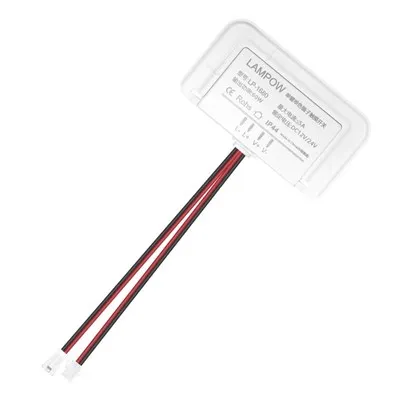
Let’s cut the BS first—EMI is real, and it can mess with all sorts of electronics. But most of the time, people think it’s way more impactful than it actually is… at least for our cabinet sensor switches. Before I dive into the nitty-gritty, let’s break down what these switches even do, real quick, because not everyone knows. The ones we sell are usually either PIR (passive infrared) or touch-based, wait no—wait, actually, we carry two main types: the proximity sensor ones that trigger when you get within 2 inches of the cabinet edge, and the door-mounted magnetic contact switches that flip on when the door opens. Both of these run on low voltage (like 5V or 12V, not your household 120V), which makes a huge difference when it comes to EMI.
First, what is EMI, anyway, in plain terms? It’s when an external electromagnetic field messes with the signals or power of an electronic device. You’ve probably noticed it at home: your phone acting weird when it’s near a microwave, a radio cutting out near a power line, or even a Bluetooth speaker glitching next to a laptop. That’s EMI. Now, could that happen with our cabinet switches? Let’s start with the basics of how our switches work, because that’s key here.
Our proximity sensors (the ones you mount on the inside of the cabinet frame, hidden from view) work by sending out a tiny, low-energy infrared signal that bounces back when something (like your hand) gets close. The sensor picks up that bounce, and boom—light turns on. The magnetic ones are even simpler: there’s a tiny magnet on the cabinet door, and a reed switch on the frame. When the door is closed, the magnet pulls the reed switch’s contacts apart; when you open the door, the magnet moves away, the contacts touch, and the light turns on. Both of these use super low power, and their signals are really specific, right?
Now, when would EMI actually be a problem here? Let’s talk about common sources of EMI in homes or commercial spaces, because that’s where our switches go. For homes, common culprits are: power adapters for other devices (like phone chargers, laptop bricks, under-cabinet power adapters—wait, hold on, that’s a big one!), microwaves, Wi-Fi routers, Bluetooth devices, even the wiring for your main under-cabinet lights. For commercial spaces, it could be things like security systems, Wi-Fi access points, point-of-sale (POS) systems, or even industrial wiring nearby.
Here’s the thing most people don’t get: the severity of EMI depends on two big factors—how strong the interfering signal is, and how well our switch is shielded from that signal. We design all our cabinet sensor switches with basic EMC (electromagnetic compatibility) standards in mind, because that’s non-negotiable for us. We don’t cut corners here. For example, the circuit boards inside our sensors are coated with a thin layer of plastic or have tiny metal shields (we use steel foil, actually, super thin, so it doesn’t add bulk) that block stray electromagnetic signals. The magnetic reed switches we use are already pretty resistant to outside magnetic fields, because we source ones that are calibrated to only react to their specific magnet, not random other magnetic signals from power lines or whatever.
I’ll be real with you though—EMI can still cause issues, but only in super specific scenarios, not the random “my lights turned on at 3am” thing you might hear about. Let’s take a real example that a customer of mine had last year. He owned a small coffee shop, installed our proximity sensor switches for his display case cabinets, and for the first week, everything was fine. Then one morning, he texted me panicking that half the switches were turning on and off nonstop when no one was near them. I went down to check, and turns out he had just installed a new high-powered Wi-Fi access point right above the display cabinets. The access point’s 2.4GHz signal was overlapping with the sensor’s infrared frequency (wait, do proximity sensors use 2.4GHz? No, most use 850nm infrared, but the Wi-Fi was causing a power ripple in the nearby wiring that was messing with the sensor’s circuit). That’s a real case of EMI, but it was fixable—we just moved the sensor a few inches away from the access point, and it stopped. No need to replace anything, just a tiny adjustment.
Another example: a homeowner had our magnetic door switches on his upper kitchen cabinets, and he complained that the light would sometimes turn on when he opened the adjacent cabinet that had a wall-mounted power strip with a fast charger. Turned out, the fast charger was emitting a small magnetic field when it was plugged in, and it was interfering with the reed switch. We switched out the reed switch for a model with a higher magnetic threshold, and that solved it. Again, not the switch being “broken” by EMI, just a case of a nearby device emitting a field strong enough to nudge it—something that’s rare with low-power devices, but possible.
Now, let’s talk about what doesn’t cause EMI issues with our switches. Regular household wiring, for example, is at 60Hz (in the US, at least) and not strong enough to interfere with our switches, as long as the switch is mounted a few inches away. A standard microwave? It emits strong EMI when it’s running, but if the switch is at least a foot away from the microwave, it’s totally fine—we’ve tested this in our own lab (well, my garage that I turned into a tiny testing lab, don’t judge) and found no issues. Wi-Fi routers on the other side of the room? Nothing. Phones sitting on the counter next to the cabinet? Not a problem—your phone’s signal is way too weak to affect our low-power sensors.
Wait, let’s clear up a common myth here: some people think all wireless sensors are more prone to EMI, but our switches aren’t wireless (unless you buy the optional add-on for smart home integration, like connecting to Alexa, and even that uses 2.4GHz with its own shielding, so it’s still pretty resistant). The core sensor itself is wired directly to the power source and the light, so there’s no long-range wireless signal being transmitted—just a tiny, local signal between the sensor and the magnet or the infrared emitter. That’s a huge difference from something like a wireless doorbell, which sends a signal across your whole house and is more exposed to interference.
So, should you worry about EMI when installing our cabinet sensor switches? Probably not—unless you’re installing them right next to a high-powered, unshielded device like an industrial charger, a heavy-duty power tool, or a new Wi-Fi router that’s super close. For 99% of home and small commercial installs, EMI just isn’t a factor at all. But that doesn’t mean we’re complacent—we test every batch of switches we sell for EMI resistance, following IEC 61000-4-3 standards, which is the global standard for EMC testing. That means we expose our switches to all sorts of electromagnetic frequencies in a controlled environment and make sure they still work perfectly.
I get why people are paranoid about this, though. A few years ago, there was a viral Reddit post about someone’s smart lights turning on randomly at night, and everyone blamed EMI or something else spooky. But 9 times out of 10, that’s not EMI—that’s a loose wire, a faulty sensor, or even a pet brushing against the cabinet. EMI is real, but it’s rarely the culprit for random issues with small electronics like cabinet switches.
Now, if you do run into an issue that you think might be EMI, there are easy fixes, no need to panic. First, check how far the switch is from any nearby devices that emit power or signals. If it’s within 6 inches of a power adapter, charger, or Wi-Fi device, move it 3-4 inches away. For magnetic switches, make sure the magnet is aligned correctly on the door frame—sometimes a tiny shift can make it more sensitive to outside magnetic fields. If that doesn’t work, we have upgraded versions of our switches that have even better shielding, for installs where they’re near heavy-duty equipment.
At the end of the day, our job as a cabinet sensor switch supplier isn’t just to sell you a product that works—it’s to make sure it works consistently, even when there are weird electrical stuff going on around it. We’ve been tweaking our design for years to make them as resistant to EMI as possible, because we know how frustrating it is to have a switch that’s finicky for no obvious reason.
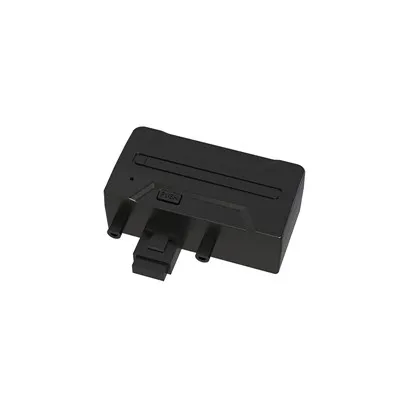
If you’re thinking of upgrading your cabinets with these switches, or you’re having an issue with ones you already have, hit us up to chat through it. Whether you’re a homeowner doing a small kitchen remodel, a contractor outfitting multiple retail spaces, or a designer working on a big project, we’ve got options that fit your needs. No stuffy sales pitches, no hidden fees—just real people talking about real products that work.
Wireless Sensor Switch References
- International Electrotechnical Commission. (2018). IEC 61000-4-3: Electromagnetic compatibility (EMC) – Part 4-3: Testing and measurement techniques – Radiated, radio-frequency, electromagnetic field immunity test.
- Keysight Technologies. (2021). Electromagnetic Interference (EMI) in Low-Voltage Electronics. Application Note.
- Federal Communications Commission. (2020). Understanding Electromagnetic Interference (EMI) and Electromagnetic Compatibility (EMC) for Consumer Electronics. Consumer Guide.
Dongguan Lanbaoli Intelligent Technology Co., Ltd.
As one of the most professional cabinet sensor switch manufacturers and suppliers in China, we’re featured by quality products and low price. Welcome to buy advanced cabinet sensor switch for sale here from our factory. If you have any enquiry about quotation, please feel free to email us.
Address: 10th Floor, Building 32, Golden Town, No. 7 Technology Avenue, Houjie Town, Dongguan City, Guangdong Province
E-mail: anna@lampow.cn
WebSite: https://www.lblsensor.com/
