If you’ve ever spent time navigating the solar power space—whether you’re a homeowner sizing a residential system, a small business owner powering a remote kiosk, or even a seasoned installer troubleshooting a rural grid-tie setup—you’ve probably stumbled on the acronym MPPT. MPPT charge controllers are the unsung workhorses of off-grid and grid-tie solar systems, tasked with squeezing every last drop of usable energy out of your solar panels before routing it to batteries or the grid. One question I get asked at my MPPT charge controller supply desk at least a dozen times a day is this: “What’s the maximum input voltage my MPPT can handle?” Mppt Charge Controller
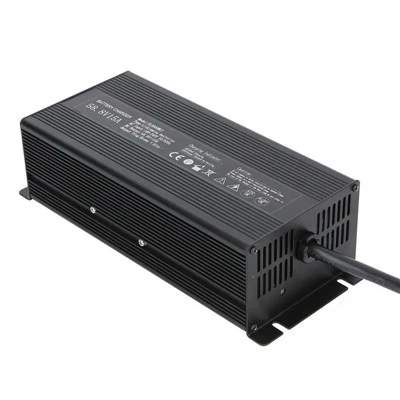
At first glance, it seems like a simple number—until you dig into the fine print, realize that “maximum input voltage” isn’t one-size-fits-all, and understand that picking the wrong one can either cripple your system, void your warranty, or worst case, create a safety hazard. Let’s break this down like I’d explain it to a first-time solar installer visiting our warehouse, no confusing jargon and no sales fluff—just hard, real-world facts that you can rely on.
First, let’s get one key term out of the way: Voc, or open-circuit voltage. Every solar panel has a Voc, which is the voltage it produces when it’s not connected to anything—when it’s exposed to full sun but not feeding power to a load or a battery. This is not the same as the operating voltage, or Vmp (voltage at maximum power), which is the voltage the panel produces when it’s actively pushing power through your system. Voc is always higher than Vmp, which is why it’s the number that matters most for MPPT maximum input voltage.
Here’s where the confusion starts: MPPT charge controllers aren’t rated for Vmp. They’re rated for maximum open-circuit input voltage. That’s a critical distinction. If you ignore this and hook up a panel array whose total Voc exceeds your MPPT’s max, you’re asking for trouble. Solar panels produce their peak Voc in cold weather, too. That’s another make-or-break detail most DIYers miss. On a sweltering 90°F (32°C) summer day, a standard residential panel might have a Voc of 38V. But when temperatures drop to freezing (32°F / 0°C), that same panel’s Voc climbs to 41V. If you wire two of those panels in series, you’re looking at a total Voc of 82V in freezing weather—versus 76V in summer. That 6V difference might not sound like much, but if your MPPT is only rated for 80V max input, that 82V in cold will blow its internal circuitry faster than you can reset a kitchen timer.
Let’s talk about how MPPT charge controllers are built, because their maximum input voltage rating is baked into their hardware from the start. Unlike older PWM charge controllers, which just shunt excess voltage away, MPPT units use a sophisticated power conversion system to match the panel’s Vmp to your battery bank’s voltage. This power conversion relies on capacitors, diodes, and semiconductors inside the controller that have strict voltage limits. Those components can only handle so much electrical pressure before they fail.
Our company, as a leading MPPT charge controller supplier, tests every unit we ship to meet strict industry standards, and we label our maximum input voltage clearly—no fine print, no hidden caveats. But even with that, there’s a range of max input voltages across our line, because not all systems are the same. A small 10A MPPT designed for a 12V off-grid cabin has a max input voltage of around 100V, perfect for a single small panel or a small array. Our mid-range 30A to 60A MPPTs, built for 24V or 48V residential systems, often top out at 150V or 200V, while our heavy-duty 100A MPPTs for commercial or utility-scale setups can handle up to 600V of max input voltage.
Wait a second—why would a bigger MPPT have a higher max input voltage? That goes back to how solar arrays are wired. To charge a larger battery bank (say, a 48V system for a 2,000 sq ft home), you need more solar panels to generate enough power. Instead of wiring them all in parallel (which would create a ton of current and require thicker, more expensive wiring), you wire them in series. Wiring panels in series adds their voltages together, so four 40V Voc panels in series give you 160V total Voc. That’s way more efficient than running high current, but it means you need an MPPT that can handle that 160V peak. If you tried to use a small 80V max MPPT for that 4-panel series array, your cold-weather Voc would exceed the controller’s limit, and you’d be out of luck.
Another common myth I hear all the time: “I can just use a voltage regulator to step down the input if I exceed my MPPT’s max.” That’s a hard no. Adding extra components to bypass the MPPT’s voltage limits not only voids your warranty, but it also creates a fire hazard. The components inside an MPPT are designed specifically to handle that exact voltage range—tampering with that leads to overheating, short circuits, or even arcing, which can start a system fire. We see this mistake all the time from DIYers who buy a cheap off-brand MPPT and try to pair it with panels that push past the rating, and the results are never good.
Now, let’s talk about how to calculate the correct maximum input voltage for your system, step by step, so you don’t make a costly mistake. First, figure out your solar array’s total open-circuit voltage. Let’s use a real example: Say you have six 40V Voc panels. You’re wiring them in two groups of three panels each, then wiring those two groups in parallel. That means total Voc is 40V per panel x 3 panels in series = 120V per series string. Parallel wiring doesn’t add voltage, so your total array Voc is still 120V. But wait—don’t forget the cold temperature adjustment. Most solar panels have a temperature coefficient for Voc, which is a small negative number (usually around -0.34% per °C). That means for every degree Celsius below 25°C (77°F, the standard test condition for panels), Voc increases by 0.34%. So if your coldest operating temperature is 0°C (32°F), that’s a 25°C drop from standard conditions. Multiply that by 0.34% per °C, and you get an 8.5% increase in Voc. So your 120V array at standard temp becomes 120V x 1.085 = ~130V total Voc in cold weather. That means you need an MPPT with a maximum input voltage of at least 130V, with a little extra buffer to be safe.
Here’s the buffer I always recommend, from years of working with installers and homeowners: Never pick an MPPT whose max input voltage is exactly equal to your array’s cold Voc. Add a 10-15% buffer. Why? Because of voltage fluctuations in real-world conditions, minor variations in panel manufacturing, and any miswiring errors that might add extra voltage. In the example above, a 10% buffer would mean you need an MPPT rated for at least 143V, so choosing a 150V max input model would be the perfect fit. If you skip that buffer and go with a 130V max MPPT, you’re risking overvoltage when the temperature drops, no matter how carefully you planned.
Let’s also address a related question: Can an MPPT’s max input voltage be higher than my array’s Voc? Absolutely, and it’s not just safe—it’s often a better choice, within reason. If you’re planning to expand your solar system in the future, buying an MPPT with a higher max input voltage than your current array gives you room to add more panels later without replacing the controller. For example, if you have a 130V cold Voc array now, buying a 200V max input MPPT means you can add three more panels in series a year from now and still stay under the controller’s limit. That’s a smart investment for anyone planning for long-term growth.
Now, let’s clear up one more point that trips up a lot of people: Max input voltage vs. max current rating. These are two separate specs, and they don’t correlate. A 100V max input MPPT could have a max current of 50A, while a 600V max input MPPT might have a max current of only 20A. The max input voltage is all about the electrical pressure at the panel side, while the max current is about how much power the controller can process and send to your batteries or grid. You need both specs to match your system, but they’re not interchangeable—one doesn’t override the other.
I can’t tell you how many times we’ve had customers call our support line panicking because their MPPT stopped working after a week, only to find they hooked up panels with too high a Voc. Last year, a homeowner in Minnesota called us at 8 a.m. complaining that their new MPPT was dead. When we walked them through checking the panel voltage, they’d wired four 42V Voc panels in series, giving them 168V total cold Voc. Their MPPT was only rated for 150V max input. We didn’t charge them for a replacement, but we walked them through how to rewire two panels in parallel and two in series to get a total Voc of 126V, which fit their controller. That call could have been avoided if they’d known to check the cold Voc and add a buffer.
Another common scenario is grid-tie systems. Wait, do grid-tie MPPT charge controllers have the same max input voltage rules? Yes, absolutely. Even if your system is feeding excess power back to the grid, the MPPT still has to handle the open-circuit voltage from your solar array, and cold weather Voc is still a factor. We supply grid-tie MPPTs for small residential and commercial setups, and all of them are tested to operate safely within their max input voltage, even in subzero temperatures.
So, what’s the takeaway here, for anyone researching MPPT max input voltage? First, forget the vague marketing claims that just say “max input voltage” without context. Look for the open-circuit voltage rating, and always adjust for your lowest operating temperature. Second, add a 10-15% buffer to that adjusted number to pick an MPPT. Third, don’t confuse max input voltage with current or battery voltage—they’re separate specs that all need to align with your system. Fourth, if you’re unsure, reach out to an MPPT supplier who knows their stuff, not a sales rep who’s just pushing a product.
As an MPPT charge controller supplier, we don’t just sell units—we build them to last, and we back them with support to help you pick the right one for your system. We’ve spent years refining our designs to make sure every controller meets or exceeds industry safety standards, and we post all our specs clearly on our site, with a detailed guide to calculating your array’s Voc and choosing the right max input voltage.
If you’re sizing a new solar system, upgrading your current setup, or just want to make sure your MPPT is safe and working at peak efficiency, we’re here to help. We work with homeowners, installers, small businesses, and agricultural operations across the country, and we can help you find the right MPPT charge controller for your specific needs, no matter how big or small your solar array is. Whether you need a compact 12V MPPT for a vacation cabin or a high-voltage unit for a commercial farm, we can support your project from start to finish.
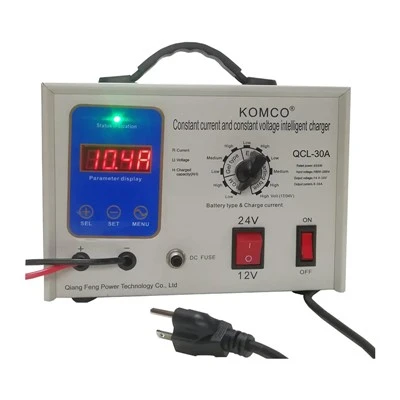
When it comes to solar, cutting corners on parts like MPPT charge controllers can lead to lost energy, safety risks, and costly repairs down the line. Taking the time to get the max input voltage right from the start is one of the most important decisions you’ll make for your system. Don’t leave it to guesswork—get the facts, follow the specs, and don’t hesitate to reach out for guidance. We’re here to help you power your solar system the right way.
Multi Battery Charger References:
- Technical Guide for Photovoltaic System Design, International Electrotechnical Commission (IEC) 61215, 2021
- MPPT Charge Controller Application and Installation Standards, National Renewable Energy Laboratory (NREL) Report TP-540-8000, 2022
- Solar Panel Voltage Specifications and Performance Modeling, Solar Energy Industries Association (SEIA) Technical Bulletin 2023-01
Huizhou Qiangfeng Power Technology Co., Ltd.
Huizhou Qiangfeng Power Technology Co., Ltd. is one of the most professional mppt charge controller manufacturers and suppliers in China, featured by quality products and good service. We warmly welcome you to buy customized mppt charge controller made in China here from our factory. If you have any enquiry about quotation and free sample, please feel free to email us.
Address: No. 28, Hu’ao Avenue, Shiwan Town, Boluo County, Huizhou City, Guangdong Province
E-mail: Komco@Jinlidianqi.cn
WebSite: https://www.autobatterychargers.com/
