Hey folks, let’s cut to the chase—if you’ve ever grabbed a hex nut from a toolbox or watched someone assemble a metal frame, a shelf, or even a piece of machinery, you probably didn’t think twice about those little six-sided metal bits. But here’s the thing: as a hex nuts supplier, I’ve spent years talking to construction crews, DIYers, manufacturing teams, and even auto mechanics, and almost half of the issues I’ve heard about that lead to breakdowns or safety scares aren’t because the nut itself is garbage—they’re because people skip tiny, obvious safety steps when using them. Today, I wanna break down the real, actionable safety stuff no one tells you, not just the boring technical fine print that makes your eyes glaze over. Let’s start with the basics that sound simple but get messed up all the time. Hex Nuts
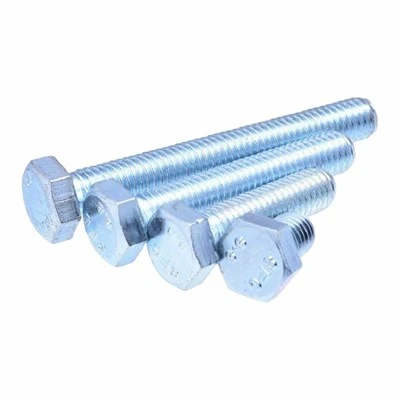
First off, size matching isn’t just a “fit” thing—it’s a safety thing. I’ve seen this so many times: a guy grabs a hex nut that looks close on the shelf, assumes it’ll work with a bolt he’s got lying around, and bam, it’s either too loose (so it falls off mid-build) or too tight (he has to hammer it on, stripping the threads so bad it never seals right). Here’s the tea: hex nuts are sized by three numbers most people don’t even check—thread pitch, nominal diameter, and hex width. Nominal diameter is easy, that’s the bolt thickness, like M10 or ½ inch. Thread pitch is the number of threads per inch or per millimeter—super important. If a bolt has 1.5mm pitch, a nut with 1.25mm pitch won’t thread on, right? But I’ve seen people mix those up because they only look at the diameter. And hex width? That’s the distance across the flat sides of the nut. If you use a wrench that’s slightly too small, you’ll round off the edges of the nut—make it impossible to tighten or loosen later, and it won’t get that secure hold it needs. Last year, I worked with a small construction company that used M8 nuts with M10 bolts because they were short on parts. Within three weeks, a handrail on a community ramp came loose, and a guy got a scraped knee. It wasn’t a “bad nut” problem—it was a “grabbed the wrong size” problem. Pro tip: always double-check the bolt and nut markings before you start. Most industrial bolts and nuts have stamped numbers on them—if they don’t, don’t use them.
Next, material choice is non-negotiable, and way more people mess this up than they should. I know, I know—hex nuts are hex nuts, right? No way, man. They come in all kinds of materials, and if you pick the wrong one for the job, you’re asking for trouble. Let’s break this down real quick: carbon steel is the cheapest and most common—great for dry, indoor stuff like shelf brackets or furniture, but leave it outside in rain, snow, or salty air (like near a beach or a road that uses salt in winter) and it’ll rust. Rust makes the nut weak, it seizes up so you can’t take it apart later, and if it’s part of something structural, that rust can cause it to break under load. Then there’s stainless steel—304 is for general use, 316 is for harsh environments like marine or chemical plants. I once had a customer who used 304 stainless hex nuts on a dock near the Gulf of Mexico. Within six months, they were pitted so bad, the bolts started corroding through. Turns out, saltwater needs 316 grade. Even worse, mixing materials? If you use a steel nut on an aluminum bolt, or vice versa, in a wet environment, you get galvanic corrosion—like an electrochemical reaction that eats through both parts. That’s not a “wait months” problem, that’s a “it falls apart in weeks” problem. And don’t get me started on soft materials—like zinc-plated steel nuts for heavy equipment. Zinc is a thin coating, sure, but it’s not for high-tension stuff. If you’re using hex nuts on a crane lift arm or a factory conveyor belt that’s moving 1000lbs a minute, you need heavy-duty carbon steel or alloy steel nuts that are heat-treated to handle that stress. I always tell customers: ask yourself, “Where is this nut going? What’s it going to be exposed to? How much weight is it gonna hold?” If you can answer those three, you pick the right material, no guesswork.
Then there’s installation—tightening it right isn’t just about twisting as hard as you can. This is where I see so many DIYers and even some new techs mess up, because they think “tighter = safer” and that’s not always true. Over-tightening is a huge issue. If you crank a hex nut so hard that the bolt stretches beyond its limit, the bolt breaks, or the nut strips, or you crack the material the nut is screwed into—like a plastic bracket or a thin metal sheet. Under-tightening is way more common, though. A loose nut vibrates off over time, especially if it’s on something that moves a lot—like a car’s wheel lug nuts, or a farm tractor that’s bouncing down a field. How do you get it right? Most structural jobs use torque wrenches. Don’t skip that. Torque specs are there for a reason—they tell you exactly how much force to apply, so you get a secure fit without breaking anything. For stuff that isn’t super critical, like a bookshelf, you can go by feel, but don’t use a cheater bar (that long pipe you put on a wrench to get more leverage) unless you really know what you’re doing. I’ve seen a guy use a cheater bar on a shelf nut and crack the entire particleboard shelf—total waste of a $10 bookshelf, and he almost got hurt when it collapsed. Another thing: never reuse hex nuts unless you absolutely have to. Once you tighten a nut once, especially if it’s torqued correctly, the threads get deformed a tiny bit. Reusing it means it won’t grip the bolt the same, so it’s more likely to come loose. I get it, supplies are tight, but for anything structural, buy new nuts.
Wait, let’s talk about locking mechanisms too, because regular hex nuts alone don’t hold up for long-term use. I can’t tell you how many people think a regular hex nut is enough for a job that’s exposed to vibration. No. If your nut is on something that moves—like a door hinge, a lawn mower blade, a truck’s exhaust pipe—you need a locking nut, or you need to add a lock washer. Nylon insert lock nuts are the most common—they have a little nylon ring inside the top of the nut that grips the bolt threads, so it doesn’t spin loose. They’re cheap, easy to use, and work great for most indoor or mild outdoor jobs. For harsher stuff, like high-vibration machinery, you might use a prevailing torque nut, or a castellated nut with a cotter pin. I had a farmer client last year whose tractor blade nuts kept falling off every month because he was using regular hex nuts. Switched to nylon insert lock nuts, and he hasn’t had an issue since. Lock washers work too, but only if they’re the right type—split lock washers, not those flimsy flat ones. Flat washers are just for distributing pressure, not locking. Split ones dig into the nut and the surface, creating friction that keeps the nut from spinning loose. Pro tip: if you’re using a lock washer, make sure it’s sized for your nut and bolt too. A too-big lock washer does nothing, a too-small one will get lost.
Oh, and don’t forget about load and application limits. This is a big one I only learned a few years ago when a local gym called me because their weight rack’s bolts kept shearing. Turns out, they were using standard hex nuts rated for 500lbs on a rack that held 800lbs of weights. Nuts have load ratings, just like bolts. If you exceed that rating, the nut will break, no matter how well you installed it. I had to send them heavy-duty alloy steel nuts rated for 1500lbs, and they haven’t had a problem since. Also, for things that are exposed to extreme temperatures—like industrial ovens or freezers—regular hex nuts can lose their strength. At high temps, some materials soften, at super cold temps, they can become brittle and crack. So if you’re working in a furnace room or a cold storage facility, you need nuts rated for those temperature ranges. That’s not something you can guess—you have to check the manufacturer’s specs.
Wait, let’s not forget about inspection, because safety isn’t just about installing right—it’s about checking right. Even if you did everything perfect when you installed a hex nut, over time, things go wrong. Rust, vibration, wear and tear. So make it part of your regular maintenance to check all hex nuts in critical areas. For a home, that’s checking shelf brackets, door hinges, window frames, bike parts. For a construction site, that’s checking structural nuts on the frame, handrails, scaffolding. For a business, that’s machinery, conveyor belts, lift arms. How do you check? Give each nut a gentle twist with your finger or a wrench. If it moves, that’s a problem. Look for rust, pitting, cracks, or stripped edges on the nut. If you see any of those, replace the nut immediately. A cracked nut is just waiting to break under load, and a pitted nut is way weaker than it looks. I had a construction worker tell me last month that he checked the scaffolding nuts every week, and last week he found one that was loose. It was a windy day, and if he hadn’t checked, that scaffolding could’ve collapsed during use. That’s why inspection isn’t a chore—it’s saving lives.
Also, let’s bust a myth real quick: “all hex nuts are the same grade.” No way. Grades matter, especially for structural use. In the US, hex nuts are graded 2, 5, and 8—grade 2 is low carbon steel, for general use, grade 5 is medium carbon, heat-treated, for higher loads, grade 8 is the strongest, for heavy structural or industrial jobs. In Europe, it’s metric grades, like 4.6, 8.8, 10.9, 12.9. A grade 2 nut can’t handle the same load as a grade 8, no matter what. If you’re using a grade 2 nut on a bridge beam, that’s a huge safety risk. When I talk to customers, I always ask them what grade they need, and I match them, no exceptions. I don’t want someone using a cheap grade 2 nut on a job that needs grade 5, because that’s on me as a supplier too.
Now, let’s talk about common mistakes I see all the time that are easy to fix. First, using a worn or damaged wrench. If your wrench has rounded edges, or it’s the wrong size, you’ll round off the hex nut’s edges, making it impossible to tighten or loosen later. That’s not just an inconvenience—if you can’t tighten a nut all the way, it’s loose. Always use a wrench that fits the nut exactly, no gaps. Second, ignoring washers. I mentioned lock washers, but even regular flat washers have a purpose. If you’re screwing a hex nut into a soft material like wood, plastic, or thin metal, the nut can dig into the material, stripping it or breaking it. A flat washer spreads the pressure, so the nut doesn’t sink into the surface. Third, not considering environmental factors. Like, if you’re installing a nut on a boat, it’s not just water—it’s saltwater, which is way more corrosive than fresh water. So 316 stainless, not 304. If you’re installing a nut on a playground swing set, it’s exposed to sun, rain, kids climbing on it—so it needs to be rust-resistant and strong enough to hold a kid’s weight.

At the end of the day, hex nuts are small, boring, and easy to overlook. But they’re one of the most important fasteners in almost every kind of build. As a hex nuts supplier, my whole job isn’t just to send you a box of nuts—it’s to make sure you have the right nuts, the right advice, so your projects are safe. If you’re working on a home renovation, a commercial build, industrial machinery, or anything else that uses hex nuts, and you have questions about size, material, grade, locking, or anything else—hit me up. I can help you pick exactly what you need, no guesswork, no junk parts. Don’t risk cutting corners on something as small as a hex nut—safety isn’t optional, and neither is using the right fasteners. Ciao for now, and stay safe out there.
Hex Nuts References:
- American Society of Mechanical Engineers (ASME) B18.2.2, Standard for Hex Nuts, 2020.
- International Organization for Standardization (ISO) 898-2, Mechanical Properties of Fasteners, Part 2: Nuts, 2012.
- National Association of Home Builders (NAHB), Fastener Safety Guide for Residential Construction, 2021.
- Marine Engineers’ Association, Corrosion Prevention for Marine Fasteners, 2019.
- Occupational Safety and Health Administration (OSHA), Structural Safety for Scaffolding and Building Frames, 2022.
Handan Jihao Fastener Co., Ltd.
We’re known as one of the most professional hex nuts manufacturers and suppliers in China. With abundant experience, we warmly welcome you to wholesale customized hex nuts made in China here from our factory. If you have any enquiry about cooperation, please feel free to email us.
Address: A2, Row 31, Feiyu Screw World, Hebei Pu, Linmengguan Town, Yongnian District, Handan City, Hebei Province
E-mail: wenzhaona0@gmail.com
WebSite: https://www.chinaboltnut.com/
