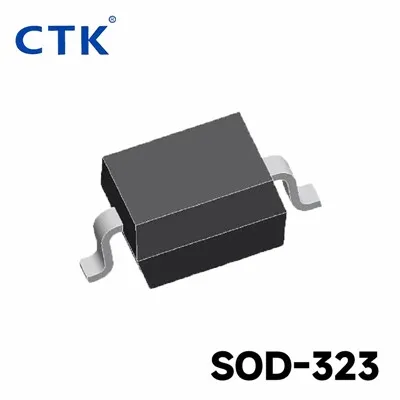
As a supplier of Schottky diodes, I understand the critical importance of protecting these vital components from over – voltage conditions. Schottky diodes are widely used in various electronic circuits due to their low forward voltage drop and fast switching characteristics. However, they are also vulnerable to damage from over – voltage, which can significantly impact the performance and reliability of the entire circuit. In this blog, I will share some effective strategies to protect Schottky diodes from over – voltage. Schottky Diode
Understanding the Risks of Over – Voltage
Over – voltage occurs when the voltage across a Schottky diode exceeds its specified maximum rating. This can happen due to a variety of reasons, such as power surges in the electrical grid, inductive kickback in circuits with inductive loads, or lightning strikes in outdoor applications.
When a Schottky diode is subjected to over – voltage, it can lead to several problems. Firstly, excessive voltage can cause the diode to enter the avalanche breakdown region. In this state, the diode conducts a large amount of current, which can generate a significant amount of heat. If this heat is not dissipated properly, it can damage the internal structure of the diode, leading to permanent failure. Secondly, the high – energy transient associated with over – voltage can cause dielectric breakdown in the diode, which can also render it inoperable.
Selecting the Right Schottky Diode
The first step in protecting a Schottky diode from over – voltage is to select the right component for the application. When choosing a Schottky diode, it is essential to consider its maximum reverse voltage rating ((V_{R})). This rating indicates the maximum voltage that the diode can withstand in the reverse – biased state without breakdown.
For applications where there is a possibility of voltage spikes, it is advisable to select a Schottky diode with a higher (V_{R}) rating than the normal operating voltage of the circuit. For example, if the normal operating voltage of a circuit is 12V, choosing a Schottky diode with a (V_{R}) rating of 20V or higher can provide a certain margin of safety against occasional voltage spikes.
In addition to the (V_{R}) rating, other parameters such as the forward current rating ((I_{F})) and the junction capacitance ((C_{j})) also need to be considered. A diode with a higher (I_{F}) rating can handle larger currents during over – voltage events, while a lower (C_{j}) can reduce the risk of capacitive coupling of high – frequency voltage transients.
Using Over – Voltage Protection Devices
One of the most effective ways to protect a Schottky diode from over – voltage is to use additional over – voltage protection devices. There are several types of such devices available, each with its own characteristics and applications.
Zener Diodes
Zener diodes are commonly used for over – voltage protection. They are designed to operate in the reverse – breakdown region in a controlled manner. When the voltage across a Zener diode exceeds its Zener voltage ((V_{Z})), it starts to conduct current, thereby clamping the voltage across the circuit to a relatively constant value.
To protect a Schottky diode using a Zener diode, the Zener diode is connected in parallel with the Schottky diode. When an over – voltage event occurs, the Zener diode breaks down and conducts the excess current, preventing the voltage across the Schottky diode from rising above the Zener voltage. The choice of Zener voltage is crucial; it should be slightly higher than the normal operating voltage of the Schottky diode but lower than its maximum reverse voltage rating.
Metal Oxide Varistors (MOVs)
MOVs are another type of over – voltage protection device. They are made of a ceramic material with a non – linear voltage – current characteristic. When the voltage across an MOV is below its clamping voltage ((V_{C})), its resistance is very high, and it behaves like an open circuit. However, when the voltage exceeds (V_{C}), the resistance of the MOV drops significantly, and it conducts a large amount of current.
MOVs are suitable for protecting Schottky diodes from high – energy transient events, such as lightning strikes. They can handle large surge currents and can quickly divert the excess energy away from the Schottky diode. When using an MOV for protection, it is important to select an MOV with an appropriate clamping voltage and surge current rating.
Transient Voltage Suppressors (TVS)
TVS diodes are specifically designed for over – voltage protection. They are fast – acting devices that can respond to over – voltage transients in a very short time (usually in nanoseconds). When an over – voltage transient occurs, the TVS diode quickly switches from a high – impedance state to a low – impedance state, clamping the voltage across the protected circuit to a safe level.
TVS diodes are available in various voltage ratings and package types, making them suitable for a wide range of applications. They are often used in circuits where fast response times are required to protect sensitive components such as Schottky diodes.
Circuit Design Considerations
In addition to using over – voltage protection devices, proper circuit design can also help to protect Schottky diodes from over – voltage.
Filtering
Adding filters to the circuit can help to reduce the amplitude of voltage spikes. For example, a low – pass filter can be used to block high – frequency voltage transients from reaching the Schottky diode. A simple low – pass filter can be constructed using a resistor and a capacitor (RC filter). The capacitor acts as a storage element, absorbing the energy of the voltage spikes, while the resistor limits the current flow.
Isolation
Isolating the Schottky diode from other parts of the circuit can also reduce the risk of over – voltage. For example, using opto – isolators or transformers can provide electrical isolation between different sections of the circuit. This can prevent voltage spikes from one part of the circuit from propagating to the Schottky diode.
Layout Design
The layout of the printed circuit board (PCB) can also affect the susceptibility of the Schottky diode to over – voltage. Short and direct traces should be used to connect the Schottky diode to other components in the circuit. This can reduce the inductance of the traces, which can help to minimize the inductive kickback voltage. In addition, proper grounding techniques should be used to ensure that the circuit has a stable reference voltage.
Monitoring and Maintenance
Regular monitoring and maintenance of the circuit can also help to protect Schottky diodes from over – voltage.
Voltage Monitoring
Installing voltage monitoring devices in the circuit can help to detect over – voltage events in real – time. These devices can provide an alarm signal when the voltage exceeds a certain threshold, allowing the user to take appropriate actions, such as shutting down the circuit or replacing the over – voltage protection device.
Component Inspection
Periodically inspecting the Schottky diodes and other components in the circuit can help to identify any signs of damage or degradation. For example, if a Schottky diode shows signs of overheating or abnormal operation, it may be a sign of over – voltage damage. Replacing damaged components in a timely manner can prevent further damage to the circuit.
Conclusion
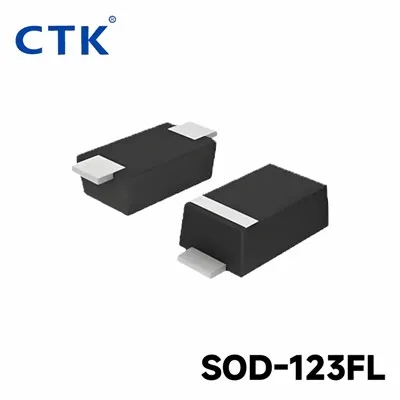
Protecting Schottky diodes from over – voltage is crucial for ensuring the reliable operation of electronic circuits. By selecting the right Schottky diode, using over – voltage protection devices, considering proper circuit design, and implementing monitoring and maintenance procedures, the risk of over – voltage damage can be significantly reduced.
ESD As a Schottky diode supplier, we are committed to providing high – quality products and comprehensive technical support to our customers. If you are in need of Schottky diodes for your applications and want to discuss the best solutions for over – voltage protection, I encourage you to reach out to us. Our team of experts is ready to assist you in selecting the most suitable components and designing circuits that can withstand various electrical challenges.
References
- “Semiconductor Devices: Physics and Technology” by Simon Sze.
- Application notes from leading semiconductor manufacturers on Schottky diode protection.
- Electrical engineering textbooks on power electronics and circuit protection.
Tongke Electronic Co., Ltd
Tongke Electronic Co., Ltd. is one of the most experienced schottky diode manufacturers and suppliers in China, featured by quality products and low price. Please rest assured to wholesale advanced schottky diode made in China here from our factory. Contact us for pricelist.
Address: No.3,Chayuan Rd, Street 3, AilingKan, Dalingshan, Dongguan, Guangdong, China.
E-mail: jack@ctk-elec.com
WebSite: https://www.ctkchip.com/
